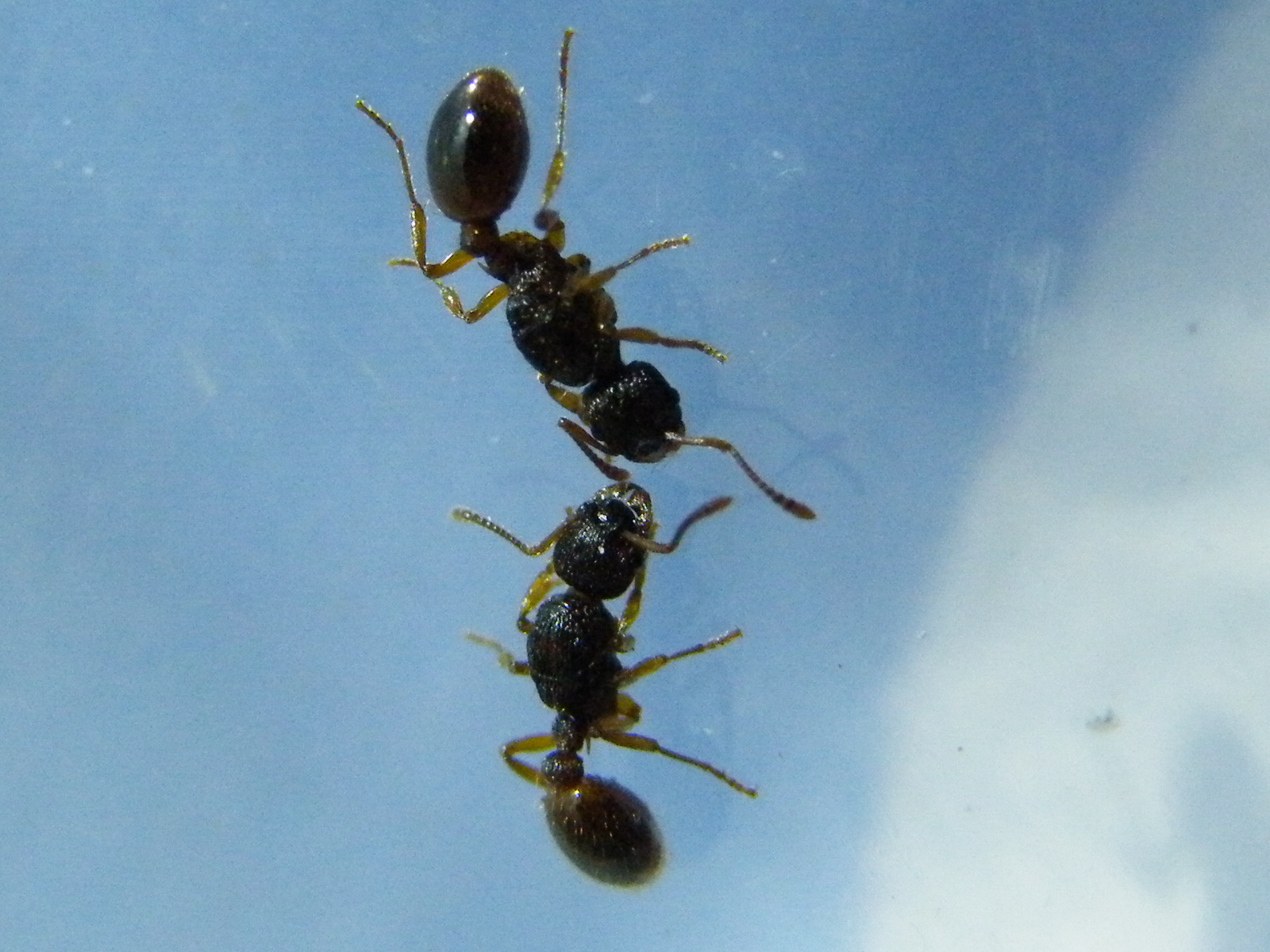
MYRMICA RUBRA. (photo is of two queens)commonly known as red garden ant/european fire ant due to its aggressive nature and painful sting, very similar to a nettle sting. Colonys can have more then 30 queens and thousands of workers, the queens can live up to 7 years +. These ants will milk aphids,eat insects,scavenge dead insects,honeywater,sweet fruit,etc. A good sized colony will even easily tackle full grown crickets or locusts ! They work well in ant farms and are great food for ant eating lizards,horned toads,thorny devils,etc. This species should be allowed to hibernate and given natural light cycles/hours. The medium for keeping this species can be of soil/peat/lightweight sand/loam,sand mix/chemical free compost. it should be kept partially moist to prevent their tunnels caving in,and for egg/larva development. these ants also like to drink water daily.
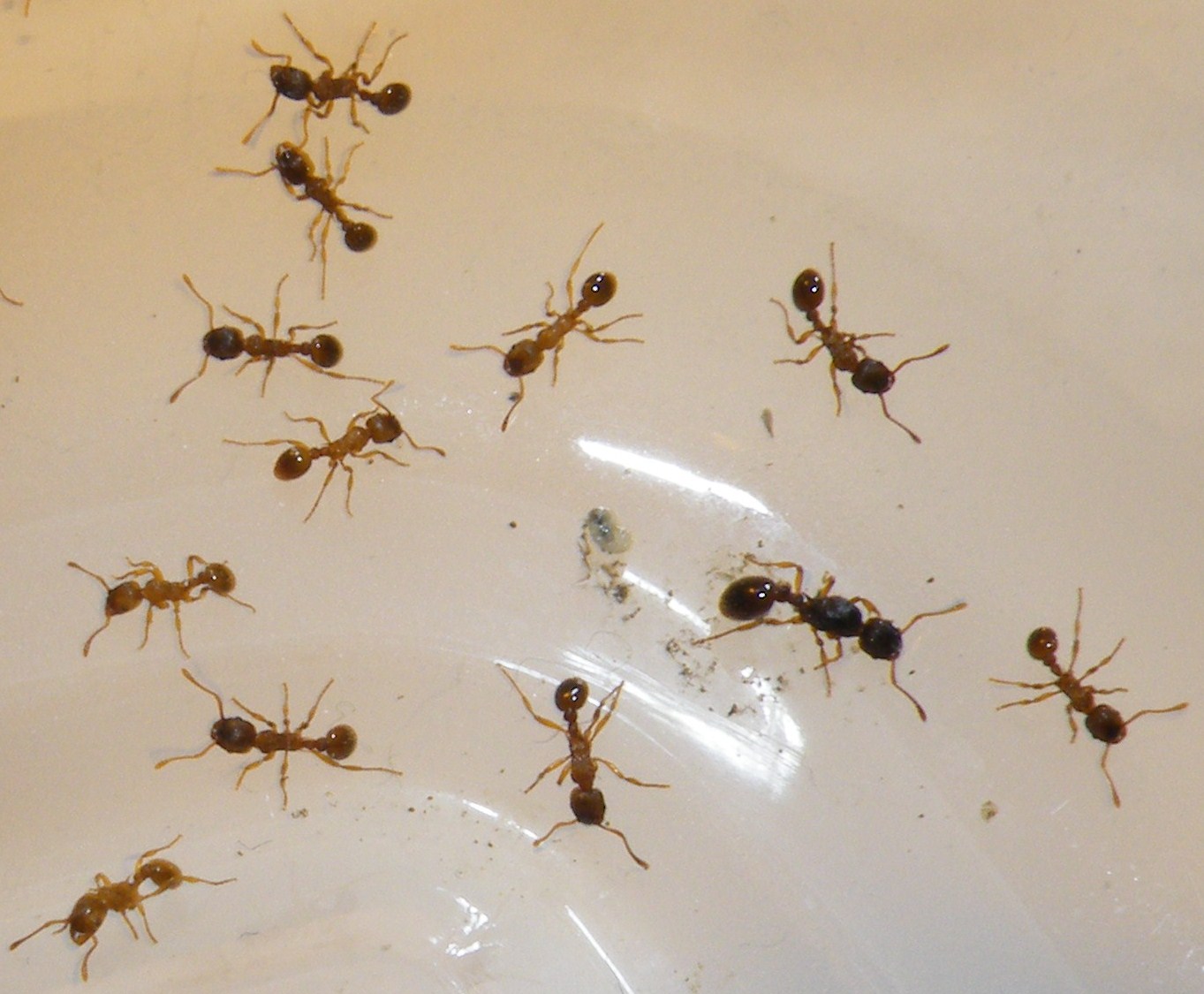
m.rubra workers with a queen. The workers of this species are all the same size,but the colour can be almost yellow "new,younger" ants to dark red " been older workers, ive observed the younger workers role is more of tending to the grubs while the older workers do the foraging/hunting.
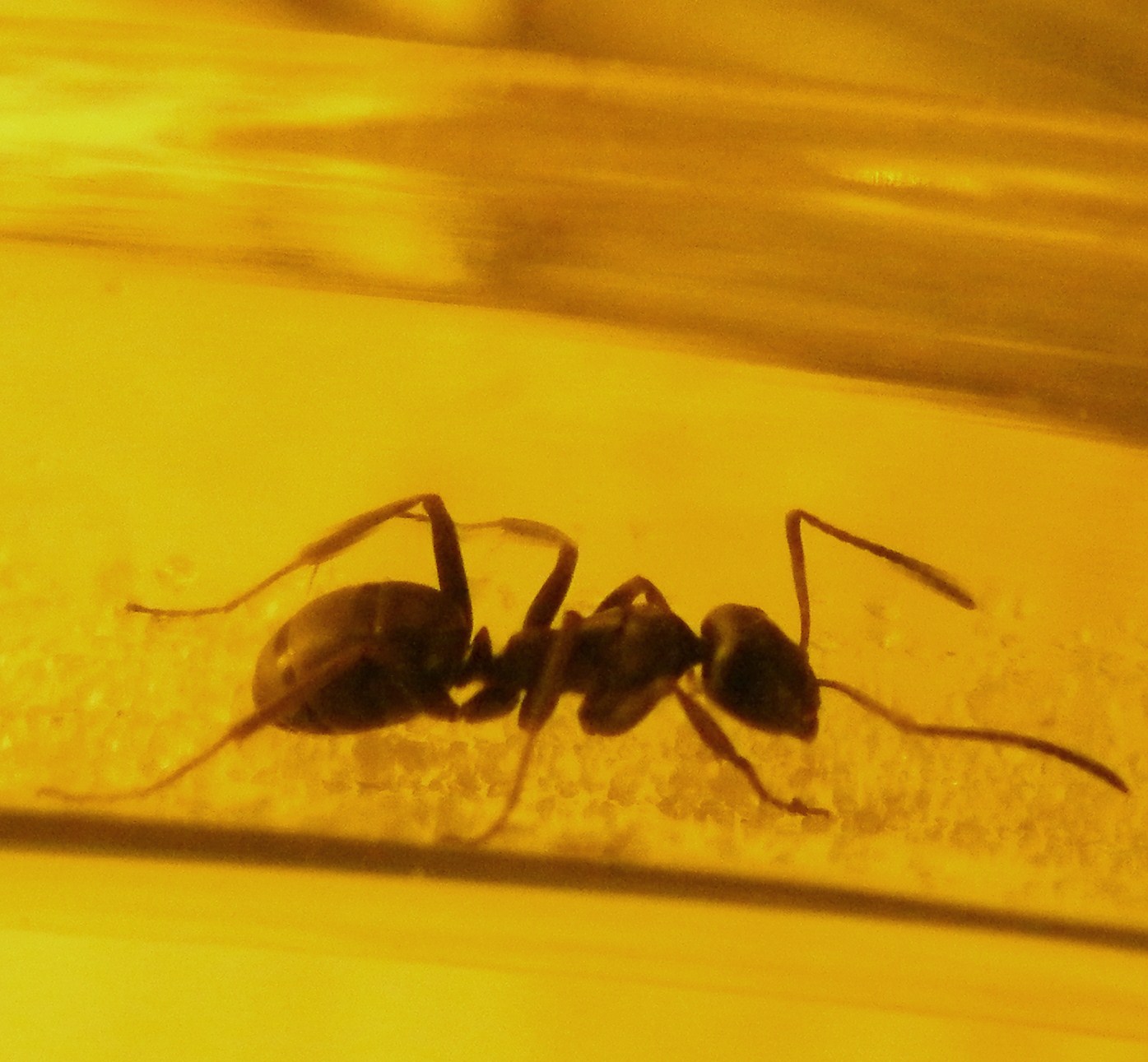
FORMICA LEMANI (photo is of a lemani worker) this formica species is another common british ant,but also can be found in mainland europe and as far as japan. unlike the very similar f.fusca,the lemani prefers to stay away from human activity and is more suited to openings/borders of pine forests and moorland habitat. These ants do not sting and would rather run from any threats, but they can bite and spray acid inside the wound ! ive also noticed this species to spray acid on already killed food to soften it before consumption. The nests can grow rather large and produce thousands of workers, the queen will create a chamber and block the entrance, when the temperature rises she will lay her first batch of eggs, in this species the first batch of workers will be as small as l.nigers,then with each brood they will get bigger, unlike the m.rubras these ants will always have different sized workers, the largest workers resembling queens ! This is a very good ant for ant farms as it is a constant egg layer and will do well with little or no hibernation. a very fast moving ant which will feed on most small insects,honeywater,etc, should have access to fresh water or rain water in their foraging area and will do well in lightweight sand,moss,peat,vermiculite/perlite/sand mixes. These ants usually have only one or two queens per colony, but up to 5+ can be possible in the early stages of the colony,(due to queens gathering together after mating) as the colony gets larger the workers usualy kill most queens until one or two remain. Very good lizard feed and their large cocoons are well known as a high vitamin fish food. the queens of this species can live for up to 12 years.
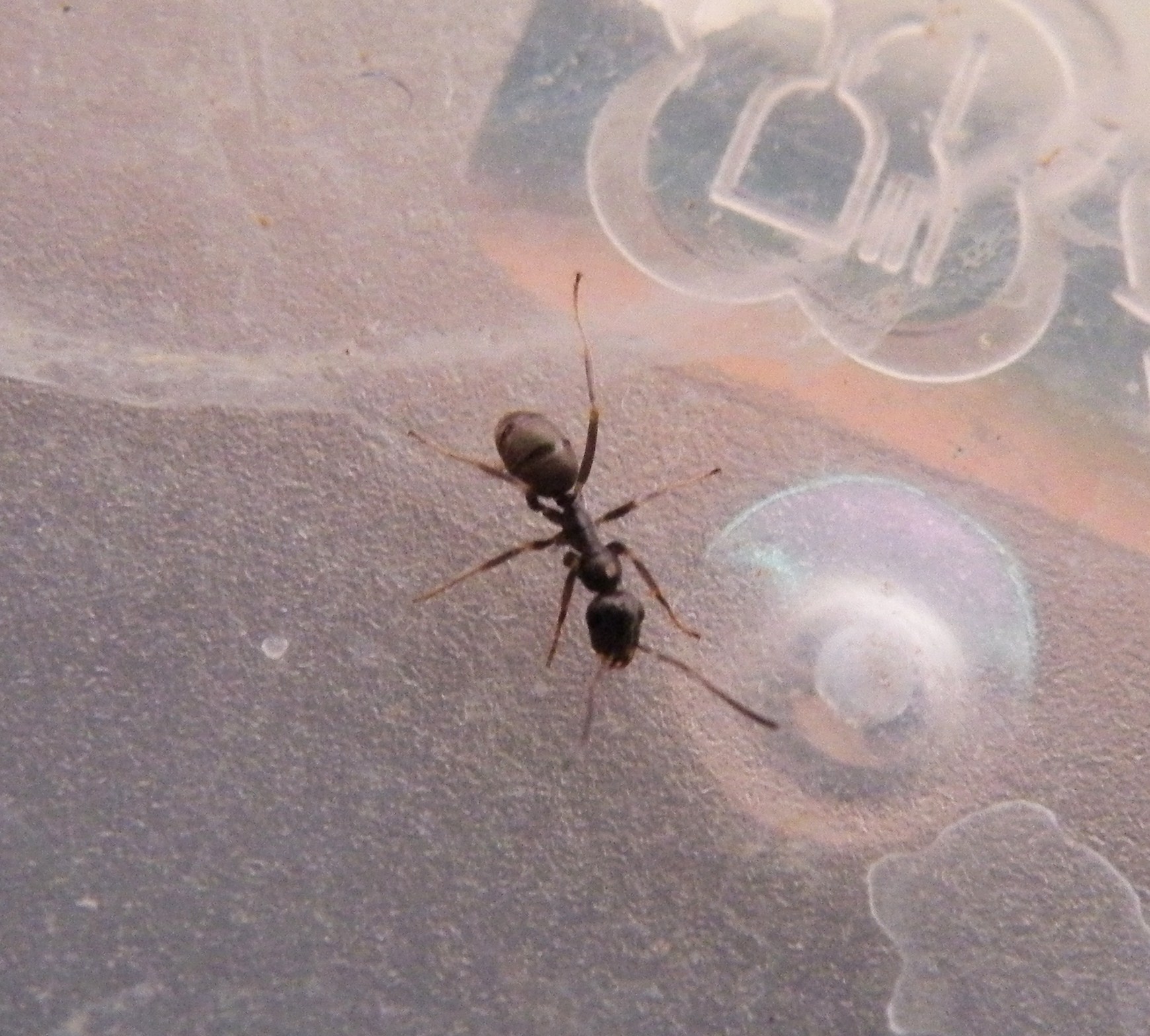
photo of the f.lemani worker from first brood,The first brood are smaller then l.niger workers, but with each brood they get bigger,becoming one of britains largest ants.
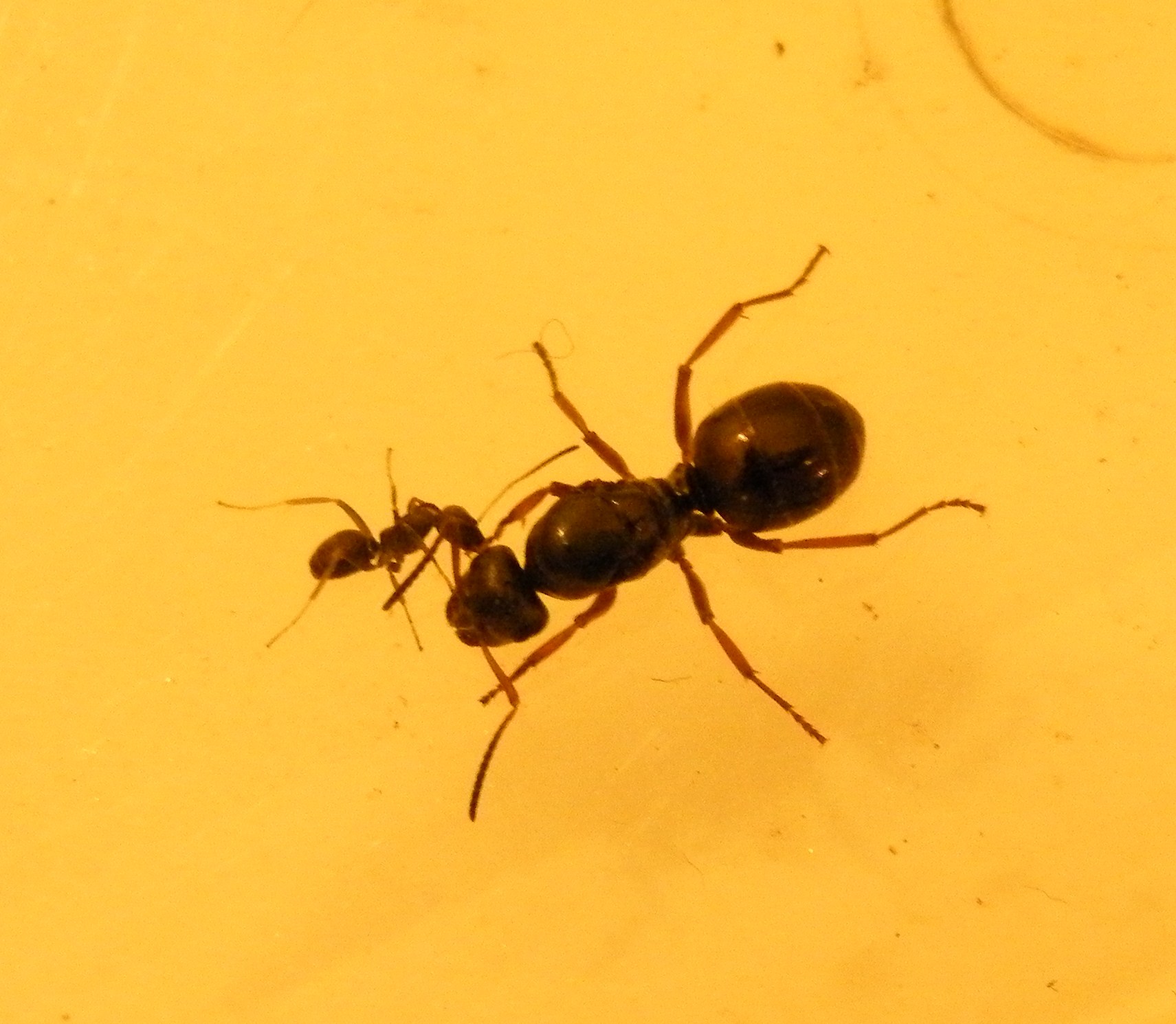
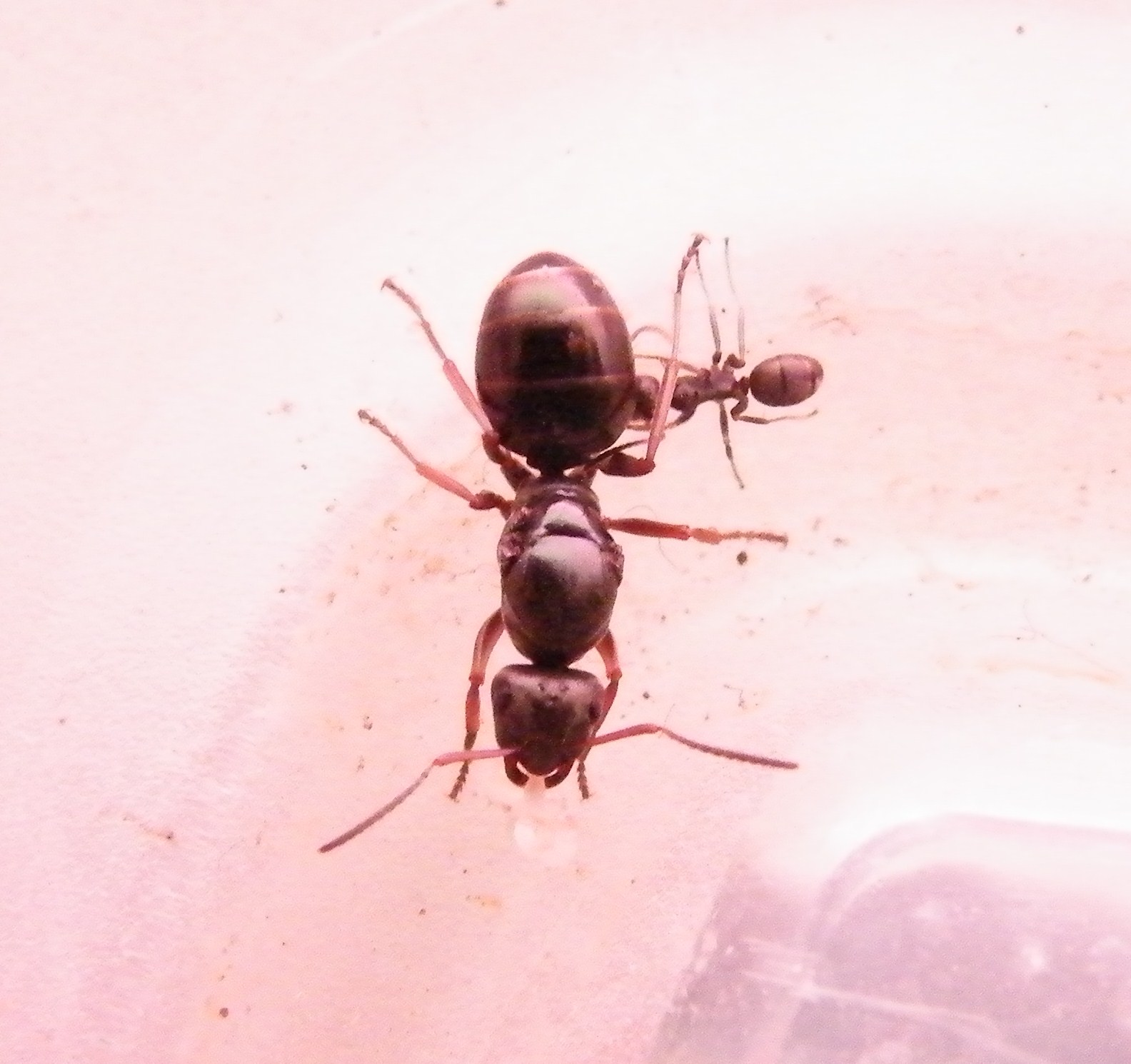
New f.lemani queens getting cleaned/fed by their first workers, these queens will also feed on insects and honey water theirselves unlike most queens which only feed from the workers.
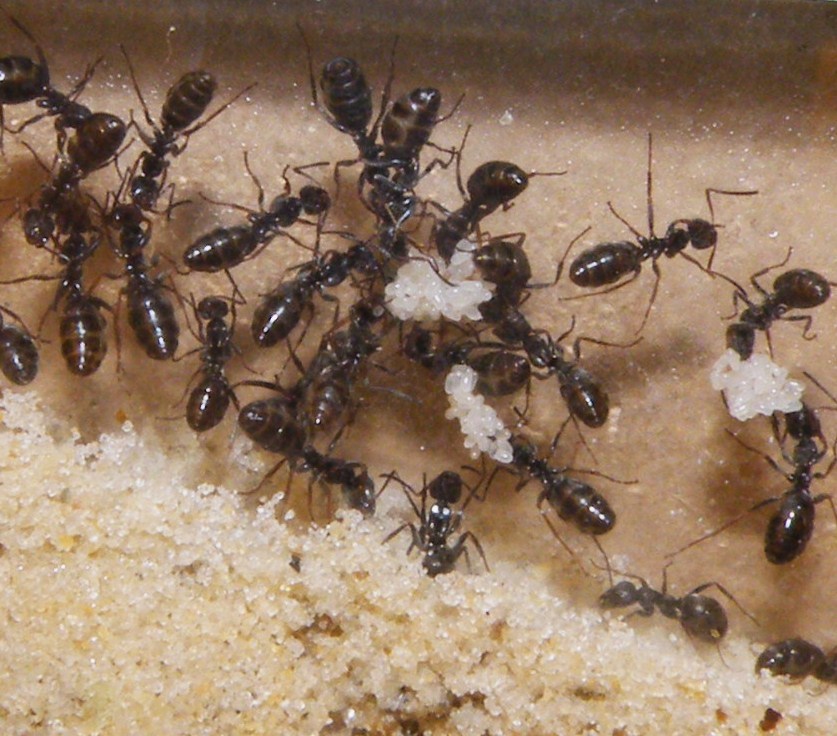
larger lemani workers with first eggs of the year, This photo was taken about 2 weeks after coming out of just a month of hibernation.
